Ticket Stub, Scarf or Programme: Choosing a Matchday Keepsake
Choose a matchday keepsake for what you want to remember: your attendance, your team connection or the details of the event itself.
The common mistake with a matchday keepsake is choosing the object that looks most substantial, then discovering it preserves the least useful part of the day. A ticket stub records that you were there, a scarf makes allegiance visible, and a programme keeps details of the event; each answers a different question when you look back.
Think first about which part of the occasion you want to carry home. These objects are not rival versions of the same souvenir. They are more like a key, a flag and a note: all useful, but not interchangeable.
1. Choose a ticket stub to preserve proof of attendance
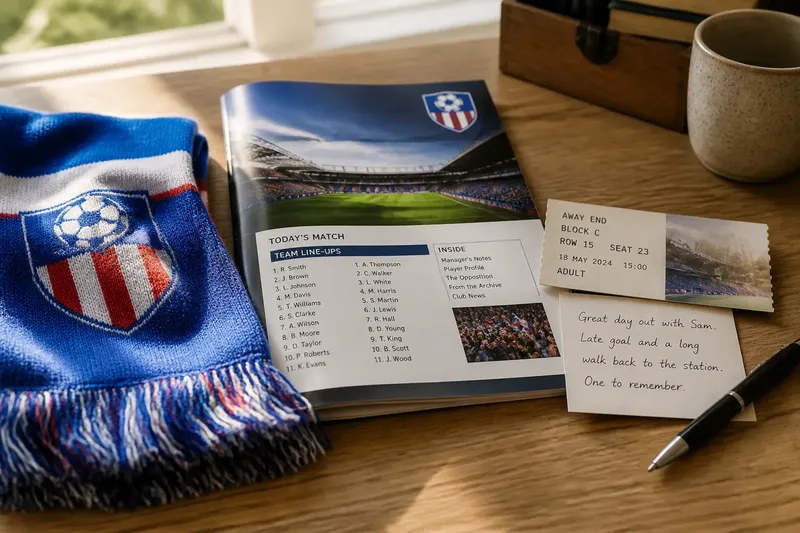
A ticket stub is the most direct keepsake if the important fact is that you attended a particular fixture. Its printed details may identify the teams, venue, date, section or entry point, depending on the ticket. That modest block of information anchors a memory to a specific occasion without asking the object to tell the whole story.
Its strength is also its limitation. A stub says little about how the match unfolded, who you went with or what made the day memorable. If the printed text is sparse, the memory may need a companion: a brief note on the reverse, a photograph stored elsewhere or a name written beside it in an album.
Paper tickets can be small, easy to misplace and vulnerable to bending, damp and fading. A mobile ticket may be easier to keep as a digital record, but screenshots can lose context and ticketing apps may not retain old passes indefinitely. If a paper ticket matters to you, keep it flat in an envelope or album sleeve rather than folded into a wallet for months.
Say you attend a cup match with a friend and mainly want to remember which fixture you shared. Keeping the stub with the friend’s name and a short note about the late walk home gives the ticket a useful human detail without turning it into a scrapbook project.
2. Choose a scarf to make team connection visible
A scarf preserves allegiance better than it preserves a particular match. Its colours, crest and familiar display make it a portable sign of connection: worn on the way to the ground, held up in the stands or kept on a hook at home. It belongs to the larger pattern of supporting a club, not just one afternoon.
That distinction matters if you want a keepsake tied to a single event. Unless the scarf carries a special fixture design or was acquired for that occasion, it may not tell you which match you attended. Its meaning comes from repeated use and association, while a ticket’s meaning is usually specific to one entry.
Scarves also ask for more space and care than a ticket or programme. Decide whether you want to wear it, display it or store it. A scarf used regularly may collect dust, snag on hooks or become part of ordinary matchday clothing; one kept for display may need a clean, dry place away from direct sunlight. Follow the care label for washing, particularly if it has embroidery or printed details.
If the colours matter more than a particular season or result, a scarf is a strong choice. If your shelf is already full of club colours, another may add less than a small object that identifies the match itself.
3. Choose a programme to preserve the event’s details
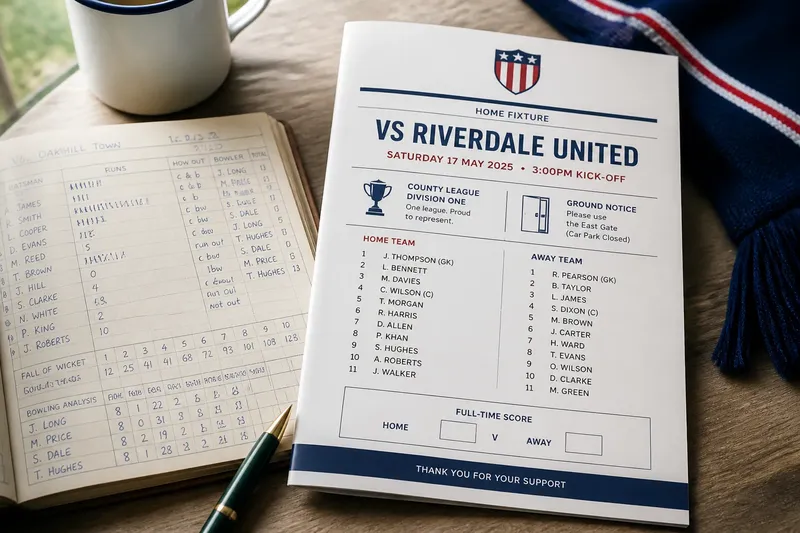
A programme is the richest of the three choices when you want a record of what surrounded the competition. Depending on the event, it may include team line-ups, player names, match information, editorial notes, advertisements and details of the venue or occasion. It gives later-you more to recognise than a date and two team names.
It is not a complete account of the match. A printed line-up can show who was expected to play, but not what changed once play began. Editorial copy records the event as it was presented beforehand, not necessarily as you remember it afterwards. The programme’s value lies in that frame: it captures the event’s printed language and context.
Programmes can also become awkward keepsakes if you collect them without deciding what they are for. They take more room than a ticket, and their pages can crease or discolour if stored loosely. Keep selected copies flat and dry, and add a short note if you want to distinguish an ordinary fixture from one that mattered for personal reasons.
Choose a programme if names, line-ups and the event’s printed identity are what you are likely to look up later. If you mainly want to remember the noise of the crowd or the person beside you, those details may need a note of your own.
4. Match the object to the memory you want to keep
Before buying or saving anything, finish this sentence: “I want to remember that…” The answer points towards the object more clearly than asking which souvenir is best.
- “I was at this particular match” points to a ticket stub, especially if it retains the fixture details.
- “This is my connection to the team” points to a scarf that you will wear or display.
- “These were the people and details around the event” points to a programme.
- “I want the match and my own memory together” points to one printed item plus a short personal note.
Then consider how you actually keep things. A ticket suits a slim album or envelope; a programme needs a little more shelf or drawer space; a scarf belongs where it will not be crushed or forgotten. The most fitting keepsake is not automatically the one with the most information. It is the one you can keep in a way that preserves the detail you care about.
5. Combine keepsakes only when each adds something
There is no need to choose a single object if two preserve different parts of the day. A programme and ticket can pair event details with proof of attendance. A scarf and ticket can pair an ongoing team connection with one particular fixture. The pairing becomes clutter when both objects are being kept for the same reason and neither adds a distinct memory.
Imagine you attend an away match and bring home a programme, while your scarf is already part of your regular kit. If the programme records the line-up but not why the trip mattered, adding the ticket and a short note about travelling with a sibling may make the set more meaningful. The expected result is a compact record that identifies the fixture and the personal connection, rather than three objects stored without context.
A simple system helps. Keep the paper items together, write the fixture and any personal detail in a consistent place, and store the scarf separately where it can still be used or seen. You do not need elaborate labels; a few clear words are often easier to revisit than a box of unexplained souvenirs.
Which matchday keepsake suits your reason for keeping it?
Is a ticket stub better than a programme?
Choose a ticket stub if you mainly want a compact record that you attended a particular fixture. Choose a programme if names, line-ups and printed details of the event matter more than proof of entry.
Can a digital ticket count as a keepsake?
Yes, if your aim is to retain the fixture details and a record of attendance. Save the pass or confirmation with a clear filename and, if useful, a note about the occasion, since an app may not keep old tickets available.
Is a scarf a keepsake for one match or for a team?
Usually it represents a continuing connection to the team rather than one fixture. A special design or a personal association can tie it to a particular match, but the scarf alone may not identify when you were there.
What should I write beside a keepsake?
Record details that the object cannot supply: who was with you, why the match mattered or one moment you want to recall. Keep it brief and specific, so the note adds context rather than competing with the object.
For a matchday keepsake, the useful question is not which object looks most impressive in a shop. It is which detail you would regret losing: attendance, allegiance or the event’s printed record. Once that is clear, a ticket stub, scarf or programme has a job beyond occupying a drawer.